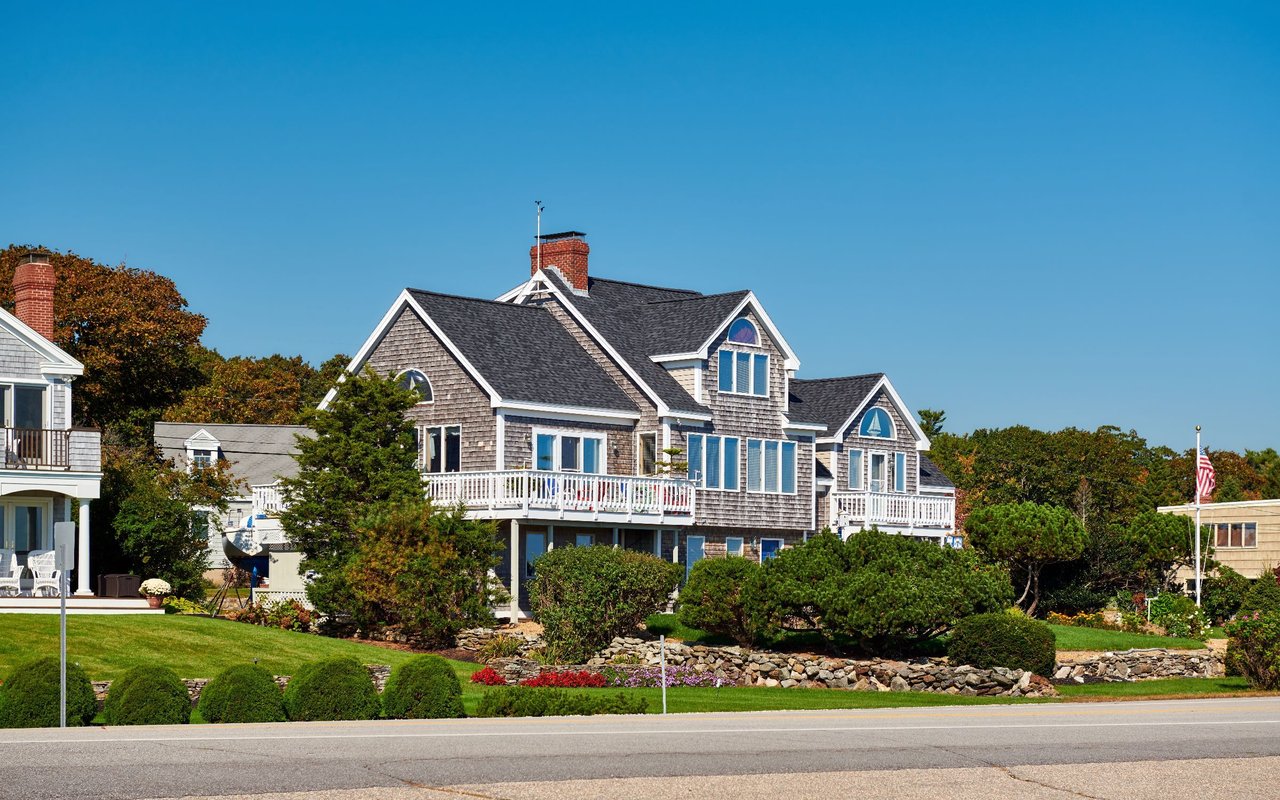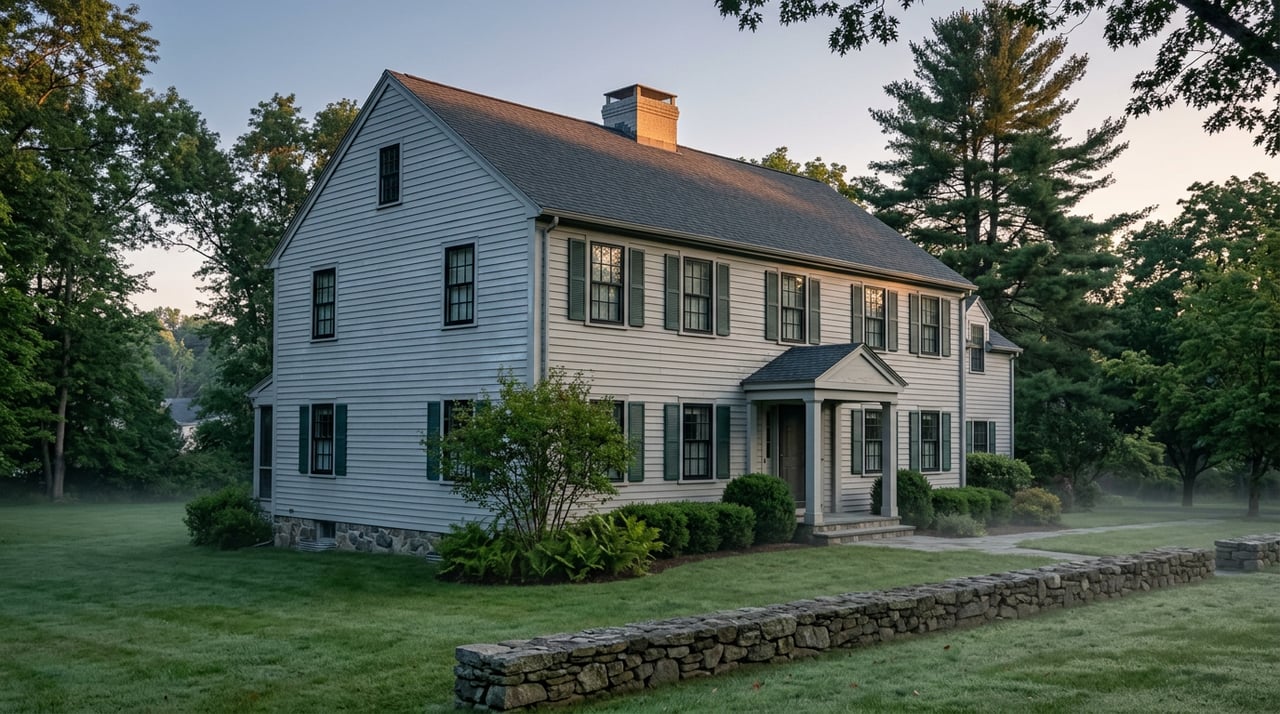
Ask any buyer who has fallen for a colonial near Lake Cochichewick what happens next, and the story tends to follow the same arc. The offer is accepted, the excitement builds, and somewhere between the accepted offer and the closing table comes a call nobody budgeted time for: this house needs a Title 5 septic inspection, and possibly a private well test too. In a town where most listings advertise municipal water and sewer as a baseline convenience, that call catches people off guard. It shouldn't. It's actually one of the more predictable things about buying real estate in North Andover, once you understand why it happens where it happens.
The map buyers are handed, and the one that's actually true
North Andover runs mostly on municipal water pulled from Lake Cochichewick and on town sewer, which is why most purchases here skip the well test and septic inspection that slow down closings in more rural parts of the region. That's the assumption baked into how the town gets described to newcomers: a Merrimack Valley suburb with modern infrastructure, not a rural outpost with pipes and pumps to worry about.
The gap in that assumption is coverage isn't total. A meaningful number of outlying parcels, particularly near the town's edges, still sit on septic systems, and some rely on private wells rather than the municipal supply. The buyer who assumes "North Andover" automatically means "hooked up to everything" is working from an average, not an address.
Why the prettiest streets are the ones most likely to still be on septic
Here's the part that surprises people once they see it: the streets most likely to still be running on private septic and well water aren't the town's forgotten corners. They cluster around Lake Cochichewick itself, in the Old Center, exactly where buyers are most drawn to shop.
That's not a coincidence. It's zoning working as designed. Lake Cochichewick is North Andover's sole source of public drinking water, and the land draining into it sits inside a Watershed Protection District that restricts building, requires special permits, and limits how close new septic systems and structures can sit to the water. The town takes this seriously because it has already lived through the consequence of not taking it seriously. In 1986, decades of runoff from septic systems and construction in the watershed led to a giardia discovery in the lake, a state-ordered boil water notice, and a $19.9 million water treatment plant the town had to build in response.
The protective zoning that followed didn't erase septic systems near the lake. It froze them in place while making the surrounding land harder to develop and, therefore, scarcer and more valuable. The same watershed rules that keep the shoreline quiet and the lot sizes generous are the reason a buyer shopping that inner ring is statistically more likely to be looking at a house on a private system than a buyer shopping the newer construction near Route 114.
What the Amazon story tells you about how sewer lines actually expand
If you want proof that "town sewer" spreads for reasons that have nothing to do with filling in old residential streets, look at what happened along Route 125 starting in 2019. When an online retail giant proposed a large distribution facility on Osgood Street, the town's sewer collection system ended roughly two miles short of the site. To make the project work, North Andover extended its sewer line about 11,000 feet north and added a new pump station, a project designed and built out in phases through 2020.
That extension solved a commercial problem. It didn't retrofit the older residential pockets nearby that had been on septic for decades and had no direct reason to be included in a project scoped around a warehouse. Sewer maps grow where the next deal needs them to grow, not necessarily where the next home buyer assumes coverage should already exist.
Two submarkets, two very different due diligence lists
North Andover isn't one housing market. It's several, layered by geography, and the utility question tracks almost exactly with the price question.
| Submarket | Typical utilities | Price position | Ask before you offer |
|---|---|---|---|
| Old Center / Lake Cochichewick shoreline | Higher likelihood of private septic and well, due to watershed-era development patterns | Scarcer lots, often the town's most sought-after addresses | Has the septic ever failed inspection? When was the well last tested? |
| Route 114 corridor / near Merrimack College and the Lawrence line | More likely on town water and sewer, newer construction stock | Prices generally ease compared to the lake side | Confirm sewer hookup date and any assessment fees tied to recent extensions |
Townwide, the median sale price has been sitting in the mid-$800,000s, up roughly 5 percent from a year earlier, with single-family homes often pushing past $900,000. That puts a fair number of North Andover purchases close to the 2026 conforming loan ceiling for Essex County, which sits at $962,550, according to Gold Coast Mortgage. A buyer who crosses that line on a lakeside property that also needs a new septic system is managing two separate financing conversations at once, not one.
What Massachusetts actually requires, and when
According to Massachusetts' guide to buying or selling property with a septic system, Title 5, the state's septic regulation on the books since 1995, requires an inspection any time a property with a septic system is sold, divided, combined, or has its use changed or expanded. The inspection itself is not invasive. It's closer in scope to a routine servicing than a construction project.
Timing is where sellers and buyers get tripped up. A passing inspection is valid for two years, so a seller who plans ahead can have the work done well before listing. If weather prevents an inspection at the time of sale, in most cases it can be completed up to six months after closing, provided the seller notifies the buyer in writing. That flexibility exists precisely because Massachusetts winters make soil-based testing unreliable on a strict timeline, which matters in a town where a fair share of the septic-dependent stock sits on exactly the kind of high-water-table land the watershed rules were written to protect in the first place.
A house near Lake Cochichewick isn't just competing on curb appeal. It's carrying a utility history that a listing sheet won't spell out, and that history is often the reason the lot was available to build on in the first place.
The questions worth asking before you write the offer
For a buyer comparing North Andover to other Merrimack Valley or southern New Hampshire towns, the utility question deserves the same attention as the school district or the commute. Before you get attached to a specific address, it's worth confirming:
- Is this property on municipal water and sewer, private well and septic, or some combination
- If septic, when was the most recent Title 5 inspection, and did it pass without conditions
- If the home sits inside or near the Watershed Protection District, what permit history exists for the lot
- How does the utility answer change the closing timeline, especially if you're shopping in winter
None of this makes North Andover a harder place to buy. It makes it a town where the infrastructure story is part of the local knowledge, the same way commute times or lot restrictions are. A buyer who asks the septic question in week one saves themselves the phone call that usually arrives in week five.
If you're comparing North Andover against Windham, Pelham, or the other Nashua-area towns and want a straight answer on what a specific address is actually running on before you write an offer, Michelle Daley can walk the utility history with you street by street and help you time the inspection window correctly from the start.
This article is general information, not legal, tax or financial advice. Consult a qualified professional about your situation.