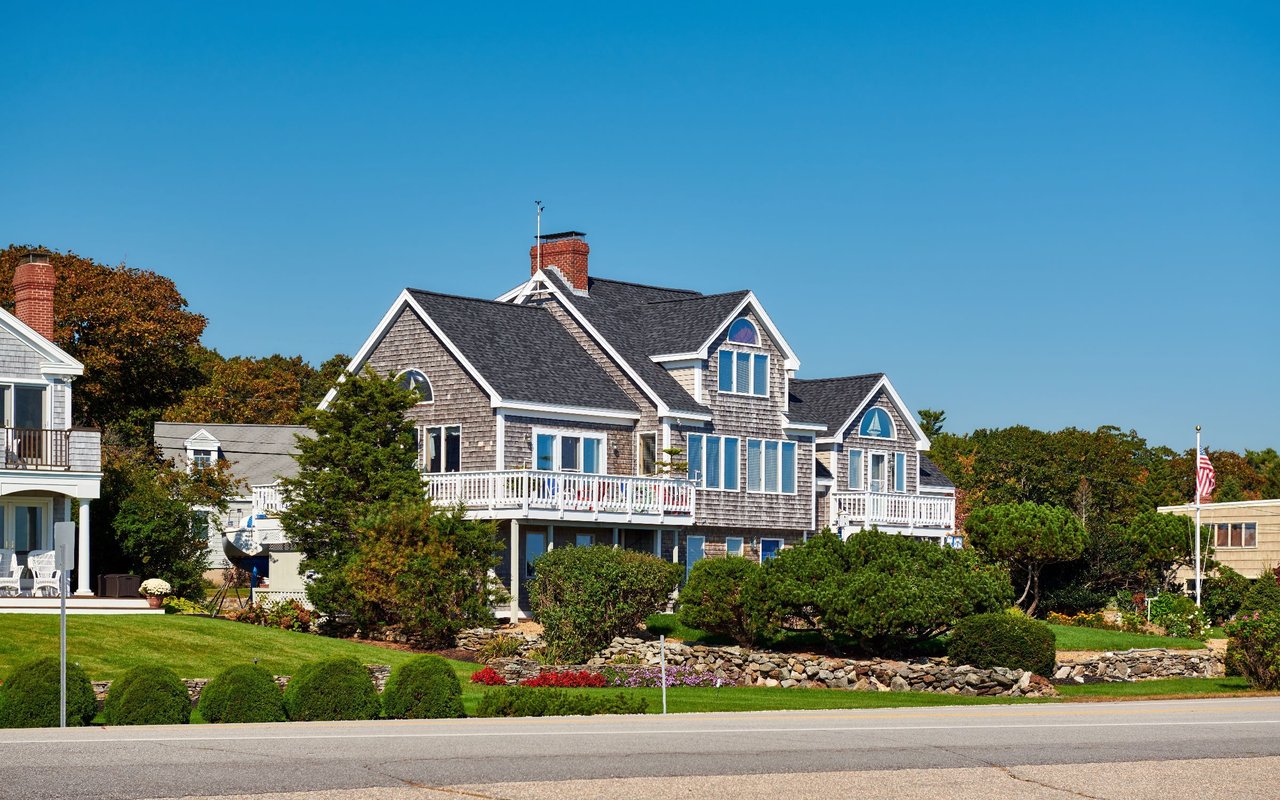
Thinking about living farther out without giving up access to Boston? Westford often comes up for commuters who want more space, a suburban setting, and a range of neighborhood styles, but it is not a one-size-fits-all town. If you are trying to figure out where commuting feels easiest, which areas have the most character, and what kind of housing you can expect, this guide will help you sort it out. Let’s dive in.
Why Westford Works for Boston Commuters
Westford sits about 35 miles from Boston and is closely tied to Route 495, Route 3, and the nearby Littleton commuter rail station. The town describes itself as a bedroom community in the I-495 Technology Corridor, which gives you a pretty clear picture of how many people use it as a home base while working elsewhere.
For most buyers, Westford works best as a car-first suburban commuter town. Recent Census Bureau data puts the mean travel time to work at 30.9 minutes, and the town’s transportation setup points more toward driving or riding to rail than walking to a station.
That matters because your day-to-day experience in Westford depends a lot on where in town you live. Some areas make highway access simpler, while others trade convenience for more land, a quieter setting, or a more historic village feel.
Westford’s Layout Matters
One of the most helpful things to know is that Westford is historically organized around five village areas: Westford Center, Forge Village, Graniteville, Nabnasset, and Parker Village. Instead of feeling like one uniform subdivision town, Westford has several distinct pockets with different streetscapes, lot patterns, and housing character.
That can be a real advantage if you are relocating or comparing suburban options. You are not just choosing Westford in general. You are choosing whether you want a compact historic setting, a lake-area neighborhood, a larger-lot property, or a more conventional post-1960 suburban layout.
Best Areas for Highway Commuting
If your top priority is getting onto the regional road network as efficiently as possible, the east and central parts of Westford are often the strongest fit. Westford’s master plan identifies I-495 and Route 3 as the town’s principal arterials, and Westford has one I-495 interchange at Exit 32 for access to Boston Road and Route 110.
The same planning documents describe Route 110, also called Littleton Road, as the town’s main highway-oriented retail corridor. That means buyers who want faster access to major roads, errands, and daily services often start their search along or near this side of town.
This does not mean every commute will be quick or predictable. It does mean that if you want to cut down on local driving before you even reach the highway, the Route 110 and Boston Road side of Westford is usually the most practical place to focus.
What Transit Looks Like in Westford
If you hope to reach Boston by transit, it is important to go in with realistic expectations. Westford does not function as a walk-to-rail commuter town.
Instead, the usual pattern is to drive or get a ride to commuter rail, then continue into Boston from there. The town points residents to nearby commuter rail in Littleton and Lowell, and the Cameron Center Transportation Department can get residents to the Littleton/495 Commuter Rail Station. LRTA also serves Westford, including Route 15 through the Chelmsford and Westford corridor via Routes 129 and 110.
For some buyers, that setup is perfectly workable. For others, especially if you want a simpler rail routine, it is something to weigh carefully before choosing the town or a specific neighborhood.
Neighborhoods With Historic Character
If you are drawn to older homes, established streets, and a more traditional village atmosphere, several parts of Westford stand out.
Westford Center
Westford Center is the town’s residential and civic center. Its historic district includes the library, town hall, museum, town common, church, public safety buildings, and commercial structures, creating a moderately dense village setting.
Lots in the district range from about one-quarter acre to seven acres, which means the area offers a mix of compact village living and some larger parcels. If you like being near civic landmarks and a recognizable town center, this area tends to have the strongest classic village identity.
Forge Village and Graniteville
Forge Village and Graniteville both developed as industrial and residential village areas. Forge Village grew around the former Abbot Worsted mill and railroad corridor, while Graniteville is known for dense residential streets and small businesses such as grocery and hardware stores.
These areas can appeal to buyers who like older neighborhood fabric rather than newer subdivision patterns. You may find a more compact feel here than in many other parts of town.
Brookside
Brookside is a smaller linear mill district along Brookside Road. Like Forge Village and Graniteville, it fits buyers who appreciate historic character and a denser, older streetscape.
If your idea of suburban living includes charm, established roads, and a stronger sense of place, these village areas may be the best match.
Where to Find More Space
If your priority is land, scenery, and a less village-like setting, Parker Village and the southern edge of town deserve a close look.
Parker Village
Parker Village developed as a farming neighborhood and still includes fields, forest, residential yards, former farmhouses, barns, and a cemetery. The historic district covers about 33 acres and includes parcels ranging from one-half acre to six acres.
This part of Westford tends to fit buyers who want a more rural visual feel without leaving town altogether. If you are looking for a property where space is part of the appeal, this is one of the clearest places to start.
Southern Westford
The town’s master plan also notes that farmhouses define the southern end of Westford. That adds to the sense that parts of southern Westford may appeal to buyers who are comfortable being a bit farther from the main retail spine in exchange for more privacy and a more open setting.
For commuters, this is often the tradeoff. You may gain lot size and quieter surroundings, but your everyday drive to highways, shopping, or rail will usually be longer.
Nabnasset and Lake-Area Living
If a lake neighborhood is high on your wish list, Nabnasset is the most obvious area to explore. The town describes Nabnasset as the area around Nabnasset Lake with small homes and cottages.
The neighborhood also connects to Edwards Beach, which includes a public beach, playground, picnic areas, swimming area, and a seasonal concession stand. That gives Nabnasset a recreation-oriented identity that feels different from the village districts and larger-lot areas.
For some buyers, that mix of smaller homes, local recreation, and lake proximity is exactly the point. If you want a setting shaped by the water rather than by a historic center or a newer subdivision, Nabnasset stands out.
What Housing Stock Looks Like Townwide
Westford’s housing inventory is dominated by detached single-family homes. The town also has nearly 800 condominiums, while two-family and small multifamily homes make up a smaller share.
The housing age mix is broad, which is one reason Westford offers so many different neighborhood experiences. According to the 2024 community profile, 19% of homes were built in 2000 or later, 37% were built from 1980 to 1999, 21% from 1960 to 1979, and 22% in 1959 or earlier.
That means your search may include anything from older cottages or village homes to 1980s and 1990s subdivisions to newer construction. It is helpful to think less in terms of one “typical” Westford home and more in terms of matching the right pocket of town to your commute and lifestyle.
Lot Sizes and Neighborhood Feel
Westford often feels roomier than some closer-in suburbs, and the town’s land-use rules help explain why. The master plan notes relatively large minimum lot-size and frontage requirements, along with no public sewer service.
Townwide sample data in the plan shows that homes built from 2000 to 2006 averaged about 1.0-acre lots, while 1950s homes averaged about 0.65 acres. Those figures are broad patterns rather than live listing data, but they help explain why many properties sit on larger parcels.
If you are comparing Westford to more compact commuter towns, this is one of its biggest distinctions. You may get more land and a more spread-out feel, but that usually comes with a stronger need to drive for daily errands and commuting.
Everyday Convenience in Westford
For day-to-day errands, Route 110 and Littleton Road form the strongest shopping and convenience corridor in town. If you want easier access to retail and services, living along or near this spine can simplify your routine.
Westford also offers a strong quality-of-life mix beyond commuting. The town highlights over 2,200 acres of conservation land, an extensive trail network, the Bruce Freeman Rail Trail, Kimball Farm, Nashoba Valley Ski Area, Nabnasset Lake Country Club, Butterbrook Golf Club, the Roudenbush Community Center, and the J.V. Fletcher Library.
That mix is part of Westford’s appeal for many buyers. You can have a suburban commuter base while still enjoying outdoor space, recreation, and a range of local amenities.
Who Westford Fits Best
Westford tends to make the most sense if you want:
- A suburban home base with access to Route 495 and Route 3
- A choice between historic villages, lake-area neighborhoods, and larger-lot settings
- Mostly single-family housing with a wide spread of home ages
- More land and lower-density surroundings than many closer-in suburbs
- Rail as a useful backup option rather than an in-town walkable feature
It may be a less natural fit if your top goal is a car-free commute or a neighborhood built around direct rail access. In that case, your location within town becomes especially important.
How to Narrow Your Search in Westford
If you are trying to choose the right part of Westford, start with your daily routine first and the house second. That approach usually leads to better long-term satisfaction, especially in a town where neighborhood feel can vary so much.
Here are a few simple ways to narrow your focus:
- If you prioritize highway access, look first at east and central Westford near Route 110 and Boston Road.
- If you want historic character, focus on Westford Center, Forge Village, Graniteville, and Brookside.
- If you want more land or a quieter setting, explore Parker Village and southern Westford.
- If you want lake access and recreation, put Nabnasset on your list.
- If you want daily convenience, pay attention to how close a property is to the Route 110 retail corridor.
The right fit is usually the one that balances commute, setting, and home style in a way that supports your actual week, not just your weekend wish list.
Westford can be an excellent option for Boston-area commuters who want more breathing room and more neighborhood variety than they might find in some closer-in suburbs. The key is understanding that the town is made up of distinct village and suburban areas, each with its own strengths and tradeoffs. If you match your search to how you really commute and live, Westford becomes much easier to evaluate.
If you want help comparing Westford with other cross-border commuter towns or need a more tailored home search strategy, Michelle Daley can help you sort through the options with a clear, local perspective.
FAQs
What makes Westford, MA appealing for Boston commuters?
- Westford offers access to Route 495, Route 3, and nearby commuter rail, along with a suburban setting, varied neighborhood styles, and mostly single-family homes.
Which part of Westford is easiest for highway commuting?
- East and central Westford near Route 110, Boston Road, and the I-495 side are usually the most practical areas for easier highway access.
Can you commute from Westford to Boston without a car?
- Most transit commuters should expect a drive-or-ride-to-station routine because Westford relies on nearby rail stations and local transit rather than an in-town commuter rail stop.
Which Westford neighborhoods have the most historic character?
- Westford Center, Forge Village, Graniteville, and Brookside are the main areas known for historic village or mill-district character.
Where can you find larger lots in Westford?
- Parker Village and parts of southern Westford are the strongest options for buyers who want more land, open scenery, and a less compact setting.
What is the lake-area neighborhood in Westford?
- Nabnasset is Westford’s clearest lake-oriented neighborhood, with small homes and cottages near Nabnasset Lake and Edwards Beach.