Wondering why so many buyers keep Salem on their shortlist when they want New Hampshire living with easy access to Massachusetts? The answer comes down to everyday convenience. If you are weighing commute options, shopping access, recreation, and housing style, Salem offers a practical mix that can make daily life feel simpler. Let’s dive in.
Salem’s border location works in your favor
Salem sits right on the New Hampshire and Massachusetts line, which gives you a strong position if your routine crosses state borders. Town planning documents identify Interstate 93 and Route 28 as the main travel spine through Salem, with roads like Main Street, Pelham Road, and Lowell Road helping connect you across town.
That road network is a big part of why Salem often feels commuter-friendly. If you need to travel south toward Massachusetts or move around Southern New Hampshire, you have direct access to major routes that support day-to-day mobility.
The town’s current commute picture reflects that convenience. According to U.S. Census Bureau QuickFacts for 2020 through 2024, Salem workers had a mean travel time to work of 29.0 minutes.
Commuting from Salem offers options
If you are comparing border towns, flexibility matters just as much as location. Salem gives you both road access and a growing mix of transportation choices, which can be helpful if you want alternatives to driving every day.
As of April 6, 2026, MeVa Route 28 connects the Lawrence, Massachusetts MBTA station through Methuen into Salem. Salem stops include Aldi, Target, Tuscan Village, and Mass General Brigham, and the pilot program is fare-free in its first year.
Salem also lists CART transportation services for fixed-route and curb-to-curb demand-response trips in Salem and nearby New Hampshire towns. The town also notes caregiver transportation for appointments and errands, which adds another layer of convenience for some households.
Traffic is part of the picture
Convenience does not mean perfect traffic flow. Salem notes that the Depot Intersection at Route 28 and Route 97 has long been associated with congestion and crash history, even though the reconstruction project has been completed.
That is worth keeping in mind if you are planning a move based heavily on commute times. In real life, the best home location for you may depend on how close you want to be to I-93, Route 28, shopping areas, or your most-used daily routes.
Tax-free shopping is a real lifestyle perk
One of Salem’s biggest practical advantages is simple: New Hampshire does not impose a sales tax on purchases of goods and services made in the state. If you shop often for household items, furniture, clothing, or gifts, that can be a meaningful everyday benefit.
In Salem, that tax advantage pairs with an established retail base. Town planning documents describe Salem as a popular regional shopping and visitor destination, which helps explain why the town draws both residents and visitors from the surrounding area.
For many buyers, that means errands can be easier to handle close to home. Instead of treating shopping and dining as a long outing, you may find that many regular stops are built into your weekly routine.
Salem has major retail and dining hubs
Salem is not just a pass-through town off the highway. It has several well-known destinations that shape how people use the area day to day.
Town planning documents identify Canobie Lake Park, Tuscan Village, and the Mall at Rockingham Park as major regional draws. That mix gives the town a broader range of shopping, dining, and entertainment options than many suburban communities of similar size.
Tuscan Village is a major part of that story. The town describes it as a 170-acre mixed-use project off I-93 and next to Route 28, planned to include about 2.8 million square feet of retail, shops, restaurants, hotels, entertainment, office space, and housing when complete.
Phase I includes a 256-unit apartment building, 96 townhouses, a new Market Basket, and a Ford dealership. Phase II is planned to add more retail, a medical facility, a cinema, hotels, and additional restaurants.
Why this matters for daily life
For you as a buyer or future seller, large mixed-use development can affect more than weekend plans. It can shape how convenient it feels to grab groceries, meet friends for dinner, run errands, or access services without driving far outside town.
That is one reason Salem stands out as a border town. It blends regional commercial activity with a more suburban residential pattern, so you get access to amenities without giving up the feel of a primarily residential community.
Recreation in Salem supports everyday living
Convenience is not only about highways and stores. It is also about how easy it is to enjoy your free time, stay active, and use local amenities close to home.
Salem’s recreation resources include the Salem Bike-Ped Corridor, Salem Town Forest, Field of Dreams, and day-hike resources in both New Hampshire and Massachusetts. The town also highlights activities such as hiking, ice skating, snowshoeing, and cross-country skiing.
The Bike-Ped Corridor is especially useful because the town describes it as a paved, multi-use trail that supports both outdoor recreation and transportation. That gives it value beyond exercise alone.
Neighborhood-scale amenities add convenience
Salem’s recreation facilities also show that the town has local places woven into everyday life. The town lists Field of Dreams at 48 Geremonty Drive as a community park and playground, along with facilities such as Hedgehog Park, Michele Memorial Park, Morse Field, Palmer Field, the Salem Athletic Club, and the Salem Boys & Girls Club.
These types of amenities can make a town feel easier to live in because recreation does not have to be a special trip. You may have options nearby for walking, spending time outdoors, or fitting activity into a busy schedule.
Canobie Lake Park adds another well-known regional amenity. Its official site states that it has more than 85 rides, games, and attractions, all located right in Salem.
Salem still feels suburban
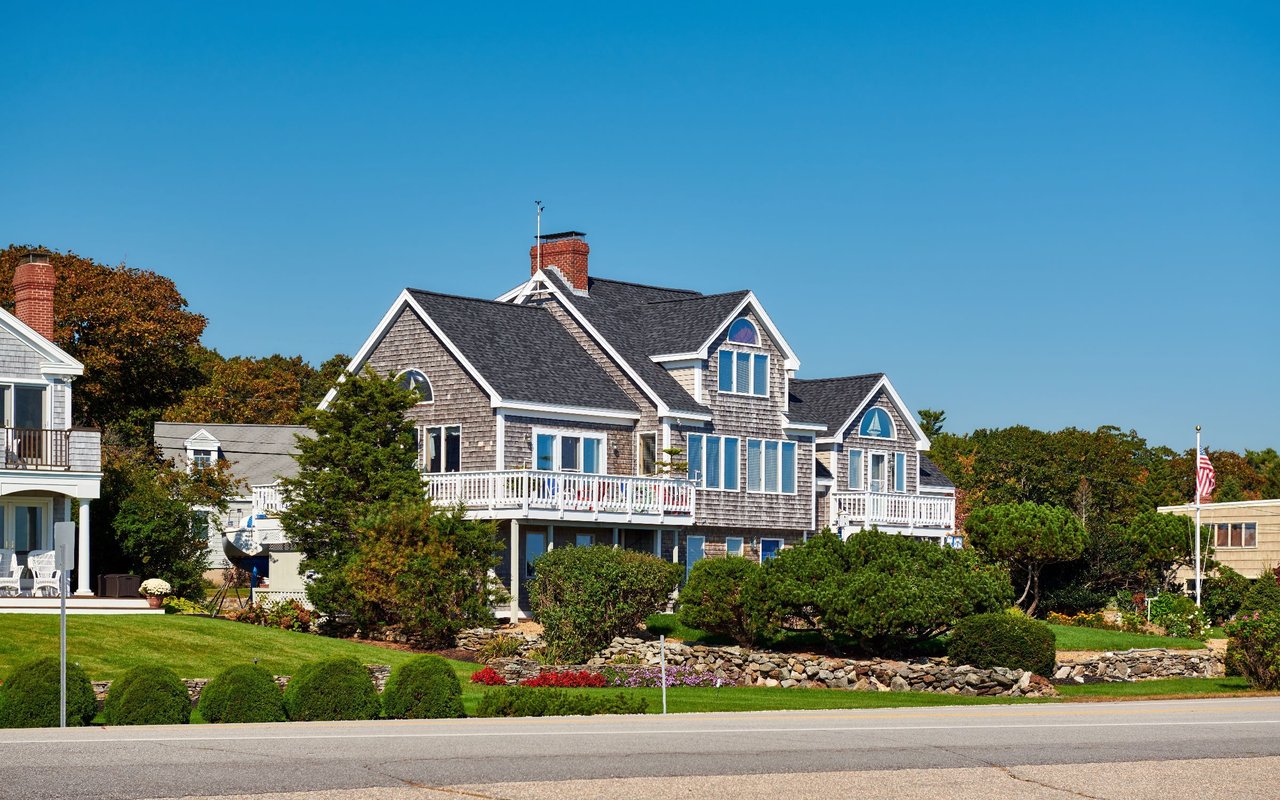
Even with its strong commercial presence, Salem’s housing profile remains rooted in traditional suburban living. That matters if you want convenience without feeling like you are moving into a dense urban setting.
According to Salem’s 2025 master plan, the town has 13,031 homes and 77.2% of them are owner-occupied. The housing mix is still dominated by single-family homes, with smaller shares of townhomes and multi-family buildings.
The same housing graphic shows about 70% single-family homes, 5% townhomes, and 6% multi-family buildings with five or more units. That helps explain why Salem often feels residential and suburban even as mixed-use growth continues near the highway corridor.
What buyers should expect
If you are home shopping in Salem, you should expect a market where single-family homes remain a major part of the inventory landscape. At the same time, projects like Tuscan Village add more housing formats and may appeal to buyers who want lower-maintenance living near shopping and services.
Current Census QuickFacts for 2020 through 2024 report an owner-occupied housing unit rate of 75.6% and a median value for owner-occupied housing units of $473,300. Those figures help frame Salem as a town with a strong ownership base and a pricing profile that many buyers compare carefully against other Southern New Hampshire and border-area communities.
Salem also updated its zoning in 2025 to allow one attached or detached accessory dwelling unit per single-family dwelling. For some homeowners, that adds useful flexibility while keeping the town’s overall housing pattern largely intact.
Why Salem stands out among border towns
When you put the pieces together, Salem’s convenience comes from a combination of factors rather than one standout feature. You have major-road access, an emerging transit link, tax-free shopping, large retail and dining clusters, and a recreation network that supports both leisure and everyday use.
At the same time, the town’s housing stock is still mostly single-family and owner-occupied. That gives Salem a more suburban feel than an urban one, even as its commercial core continues to expand.
If you are relocating, upsizing, downsizing, or simply comparing Southern New Hampshire options, Salem is worth a close look because it can serve very different lifestyles. For some buyers, the draw is the commute. For others, it is the balance of amenities, housing choice, and daily convenience.
If you want help figuring out whether Salem fits your goals, working with a local advisor can make the search much clearer. Michelle Daley offers thoughtful, high-touch guidance for buyers, sellers, relocators, and landlords across Southern New Hampshire and nearby Massachusetts border towns.
FAQs
What makes Salem, NH convenient for commuting?
- Salem has direct access to Interstate 93 and Route 28, and Census data for 2020 through 2024 shows a mean travel time to work of 29.0 minutes for Salem workers.
Does Salem, NH have public transportation options?
- Yes. As of April 6, 2026, MeVa Route 28 connects the Lawrence MBTA station through Methuen into Salem, and Salem also lists CART transportation services for local and nearby trips.
Why is Salem, NH popular for shopping?
- Salem benefits from New Hampshire’s lack of general sales tax and has major shopping and mixed-use destinations including Tuscan Village and the Mall at Rockingham Park.
What is the housing mix like in Salem, NH?
- Salem’s 2025 master plan shows a housing stock dominated by single-family homes, with smaller shares of townhomes and multi-family buildings, which supports a suburban feel.
Does Salem, NH offer parks and recreation?
- Yes. Salem lists amenities such as the Bike-Ped Corridor, Salem Town Forest, Field of Dreams, and several parks and athletic facilities, plus Canobie Lake Park in town.